
Diabetes is one of the most urgent global health challenges of this century. The disease not only burdens
individuals but also puts increasing strain on healthcare systems, especially in low- and middle-income countries where roughly 75 percent of residents have the disease. Worldwide, as well as in Armenia, the number of people living with diabetes is rising steadily — and with it, serious complications like vision loss, nerve damage and cardiovascular disease.
In response to this growing crisis, the Armenian EyeCare Project (AECP), in partnership with the
World Diabetes Foundation (WDF) and Armenia’s Ministry of Health, has been working to combat
diabetes and its complications through our revolutionary Diabetes Program. As part of the program,
we are pleased to share that AECP has officially established its first Diabetes Schools with more to be developed throughout Armenia in the coming year.
This approach is the first of its kind in Armenia in both structure and content. Diabetes Schools
are designed to empower people living with Type 2 diabetes by providing the tools, knowledge and confidence needed to manage their condition, prevent complications and improve quality of life.
A Unified National Model
What makes this initiative unique is its standardized approach, which aims to bring uniform, high-quality diabetes education to communities across Armenia. While similar efforts have existed in isolated
settings, this project is the first to apply a consistent, nationwide model — one that uses uniformity
in language, educational structure and patient-centered methodology. This level of standardization
ensures that people, regardless of where they live, receive the same quality of education and care.
A Long-Term Partnership With Impact
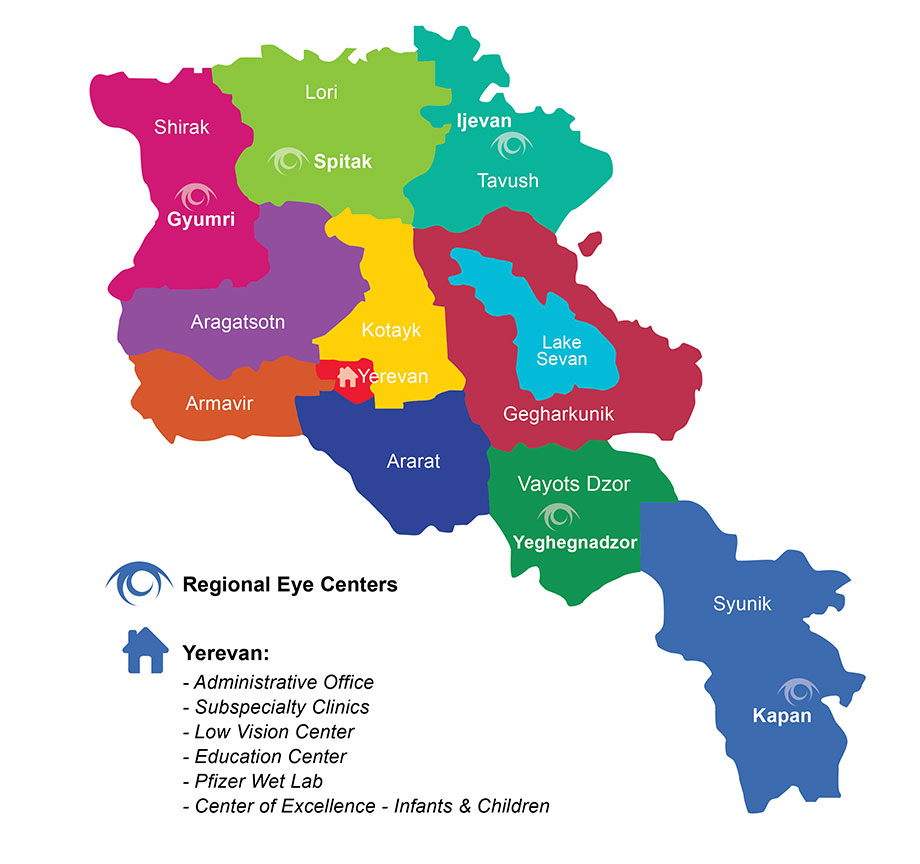
Our Diabetes Schools initiative builds on a longstanding partnership between AECP and WDF. Since 2017, our two organizations have worked together to combat diabetes and its complications in Armenia. These efforts include supporting Armenia’s Ministry of Health in developing a national strategy for the prevention of diabetes and its complications for the years 2022 to 2026. The launch of Diabetes Schools is an essential component to turning this national strategy into practical, lifechanging action. Three schools will be established over the next year, beginning with two locations already operating in Gyumri and Vanadzor. Other NGOs, empowered by AECP’s approach, methodology and educational tools, have
also initiated the launch of similar schools in other regions of the country.
Training the Educators
To ensure sustainability, AECP has invested in training local healthcare professionals — endocrinologists
and family medicine doctors — so they can deliver the Diabetes School curriculum within their communities. This approach not only builds local capacity but also transforms doctors into health educators and advocates. As well, our organization has also developed a comprehensive educational manual titled “Diabetes School: A Guide for the Education and Management of People with Diabetes.” The manual was authored by a team of leading experts in the field. Drawing on their extensive clinical experience, previous practice of managing diabetes schools and incorporating international standards and best practices, the manual provides a practical, patient-centered curriculum. It features detailed lesson plans, visual materials, real-life case studies and clear guidance for educators working directly with people living with diabetes — making it a first-of-its-kind resource in Armenia.
 Inside the School
Each Diabetes School includes four-day interactive group sessions, during which participants learn how
diabetes progresses and affects the body, how lifestyle changes like proper nutrition and regular physical
activity can help manage blood sugar and how to prevent or delay complications. The curriculum also
includes topics like blood pressure and cholesterol control, insulin therapy, glucose self-monitoring, oral
hygiene, foot care and managing the disease during times of illness or stress. Educators use accessible
language, engaging visuals and real-life scenarios that foster open discussion and active participation.
“Diabetes School was a great opportunity for me to gain valuable knowledge I had never received
before. I learned how to better manage my condition – like knowing when to eat, how to calculate my
medication dosage and how to take care of myself,” said Anush Petrosyan, from Gyumri.
“I was able to undergo free medical tests that I could never afford otherwise. From now on I will do
physical activities daily and eat healthy food. I’m truly grateful for this initiative,” said Anahit Sevoryan, also from Gyumri.
Care Beyond the Classroom
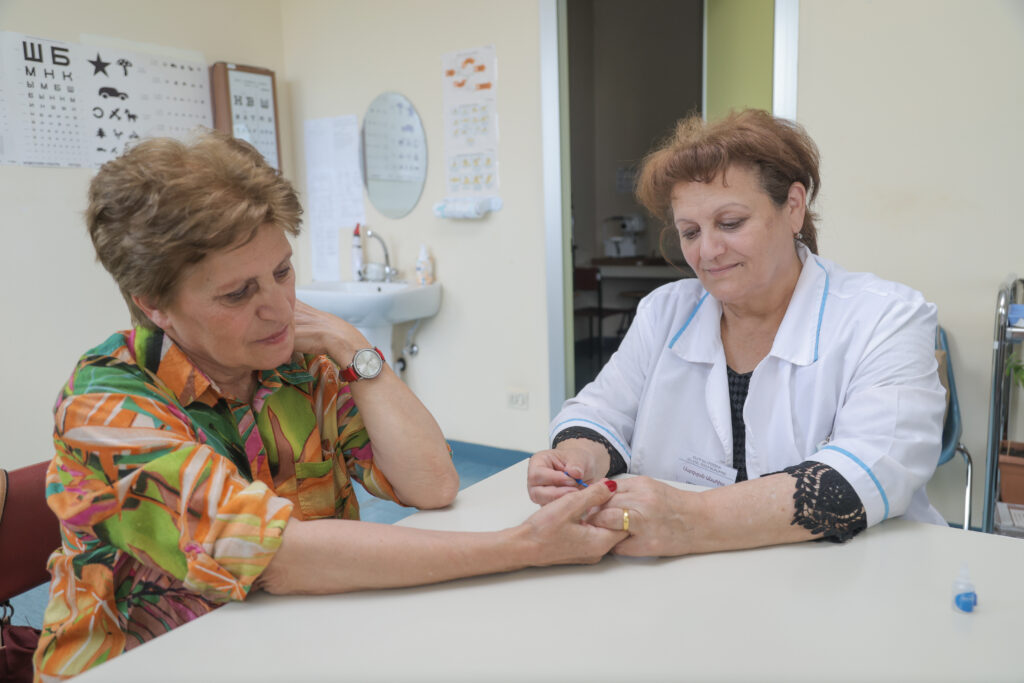
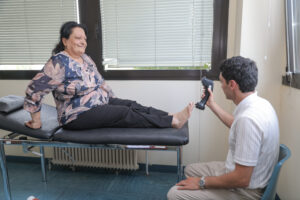
What sets these schools apart is that education is paired with essential medical services – some of which are being made available for the first time in these regions of Armenia. At the conclusion of each course, participants receive free, on-site screenings tailored to the needs of people with diabetes. These include HbA1c testing to assess average blood glucose levels over the past three months, foot screenings to detect early signs of diabetic foot complications and retinal imaging using state-of-theart equipment and AI technology to identify diabetic eye disease. For many participants, these screenings are a first opportunity to access such services locally.
 A Model for a Healthier Future
The urgency of such programs cannot be underestimated. According to the 2025 IDF Diabetes Atlas, more than 11 percent of the global adult population is living with diabetes, with over 40 percent
unaware they have the condition. Globally, an estimated 589 million adults (20-79 years) are living with
diabetes, representing roughly one in nine adults. This number is projected to increase by 2050.
Over 90 percent of diabetes cases are Type 2, largely driven by urbanization, aging, inactivity and obesity. Yet much of this can be prevented through early diagnosis, education and care. Our Diabetes Schools initiative addresses the problem by combining patient education, screening and capacity building within a standardized national model, helping build a healthier and more informed Armenia.